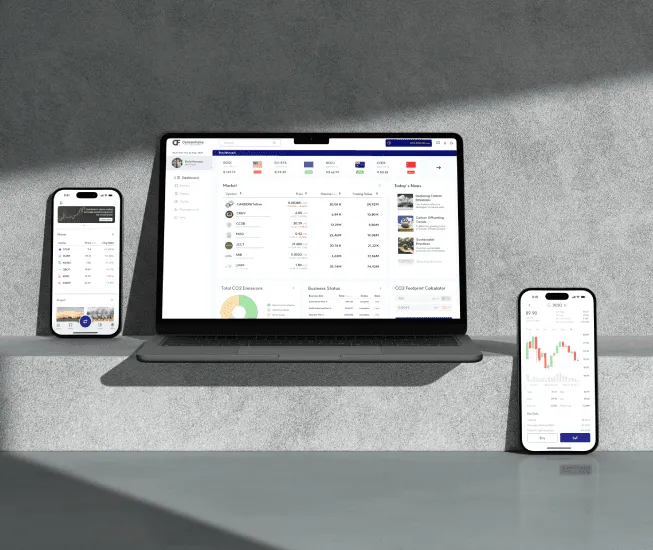
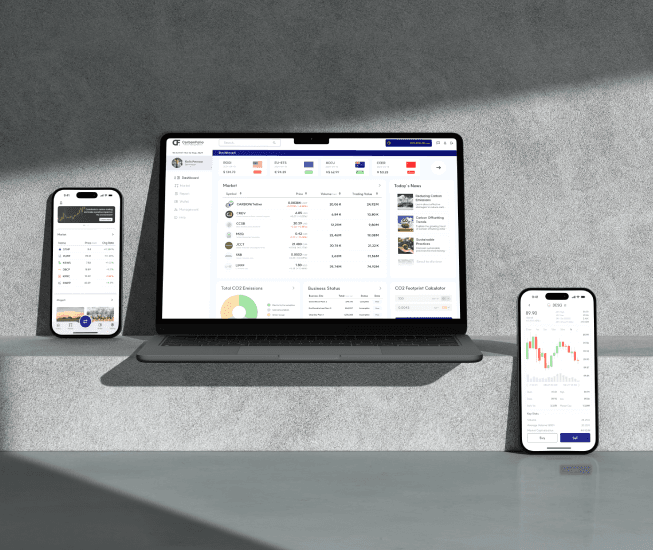
Overview
“Simplifying complex carbon trading into a clear, guided experience for confident decision-making”
Many users struggle to understand pricing, transactions, and asset credibility in carbon markets. This project redesigns the trading flow by improving information structure and guiding users step by step, enabling more confident decision-making in complex financial environments.
Initial Assumption
Hypothesis 01
#Clarity
#Guidance
What if
simplifying the trading process will reduce confusion and increase trust.
Hypothesis 02
#Structure
#Understanding
What if
a more structured trading flow could improve users’ understanding of carbon credits and transactions?
Hypothesis 03
#Transparency
#Confidence
What if
increased transparency could strengthen confidence in transaction history and asset credibility?
Understanding the Market
Market Research
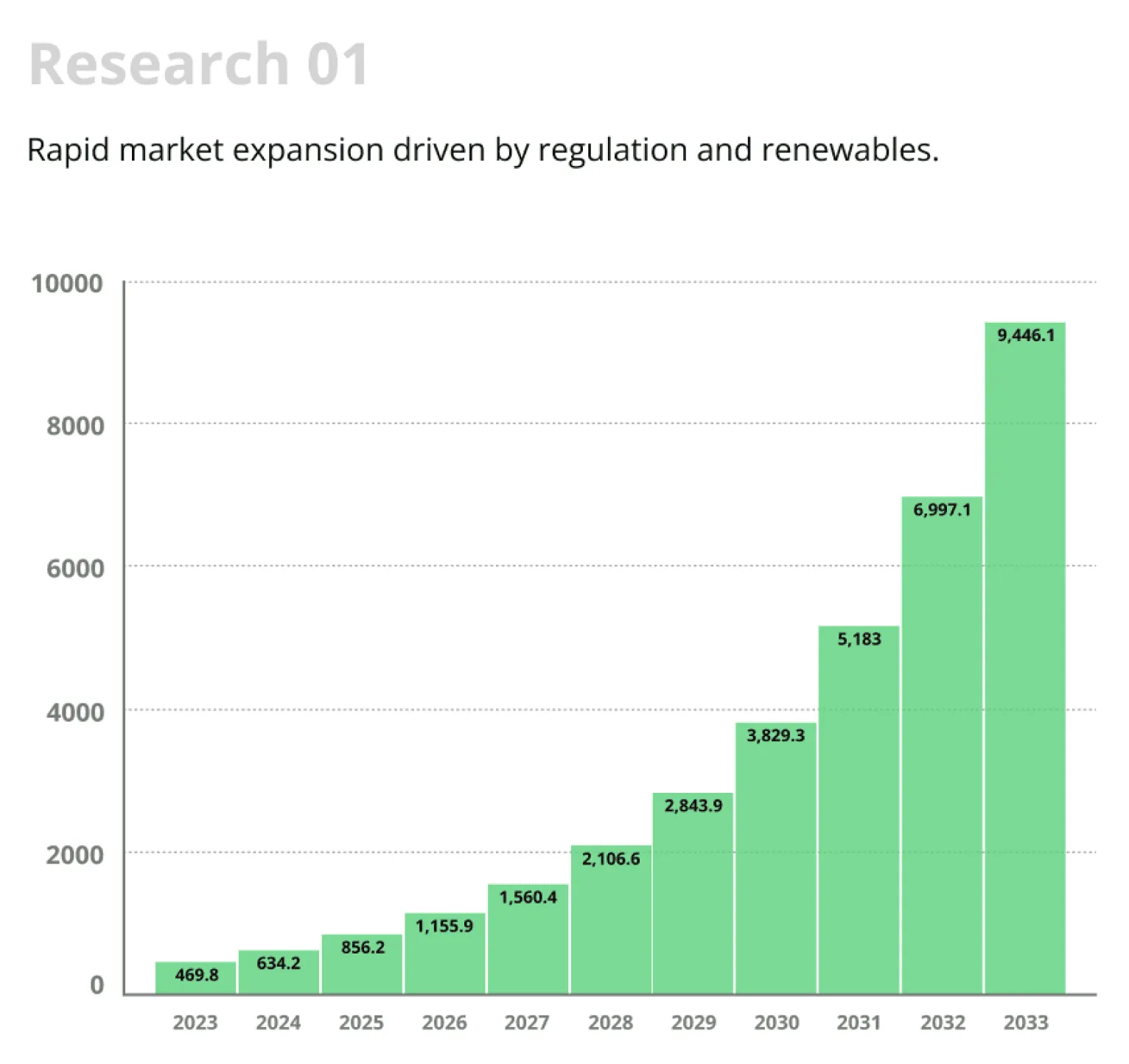
The carbon market is growing rapidly, but the ecosystem is becoming more complex. As more users join, platforms remain difficult to understand, especially for individuals and small businesses. This highlights the need for simpler and more structured trading experiences.
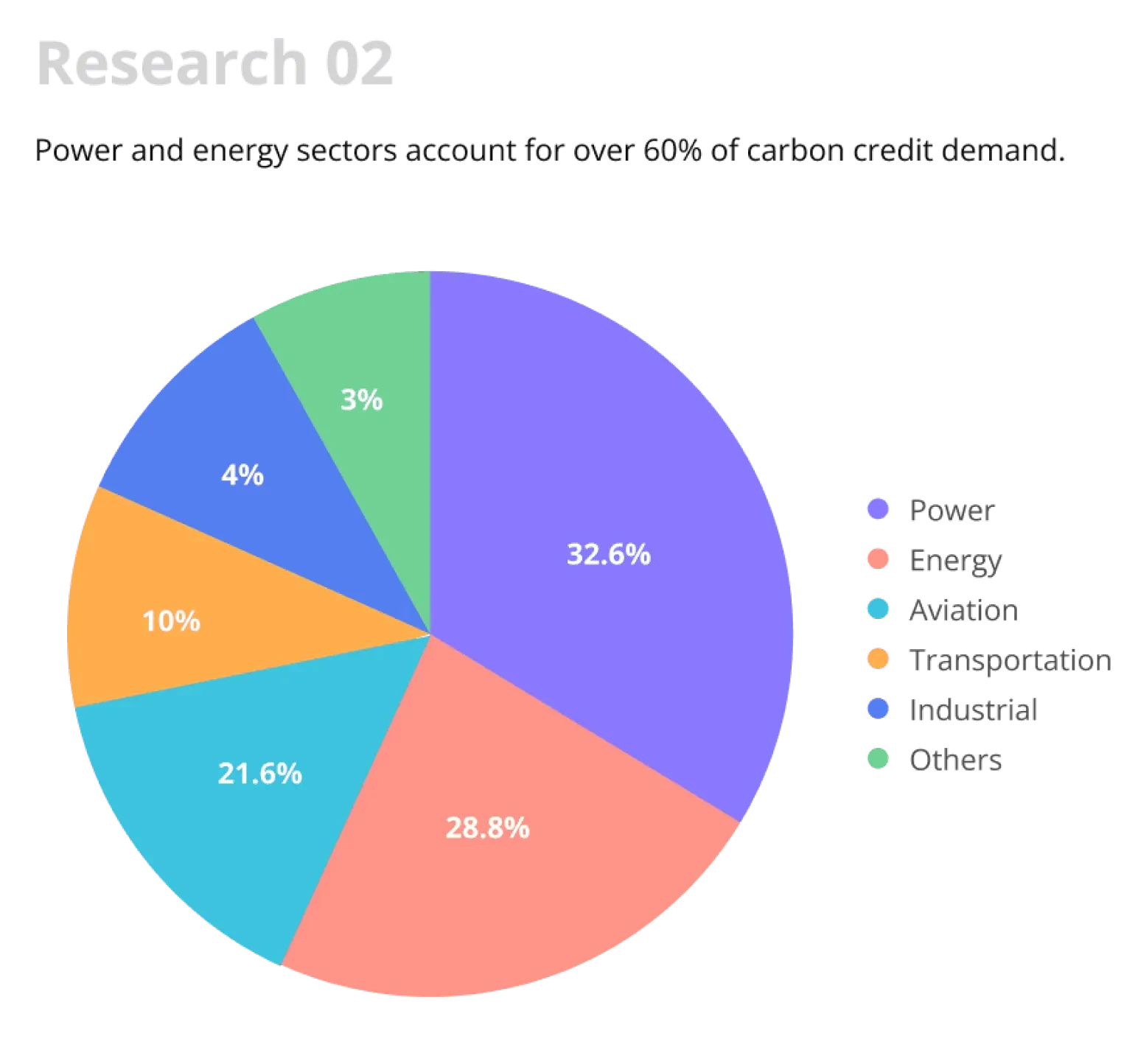
Carbon credit demand is concentrated in the power and energy sectors, accounting for over 60% of the market. As more industries participate, complexity increases due to varying regulations, asset verification standards, and transaction processes. This growing complexity reinforces the need for transparent and structured platforms that help users navigate the market with confidence. This insight directly informed the need for a guided and simplified trading experience.
Competitors Analysis
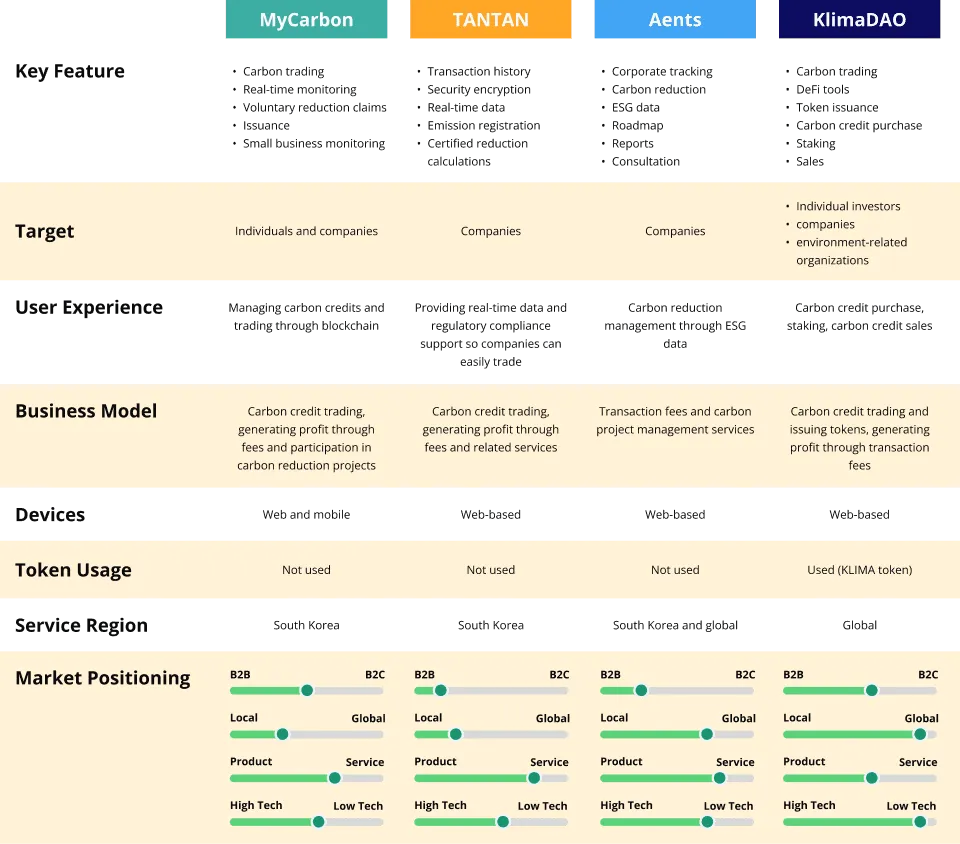
Most platforms focus on infrastructure, compliance, and emissions management rather than the trading experience. As a result, few services provide a clear and structured flow for users. This reveals a clear gap for a more guided and user-centered trading experience.
SWOT
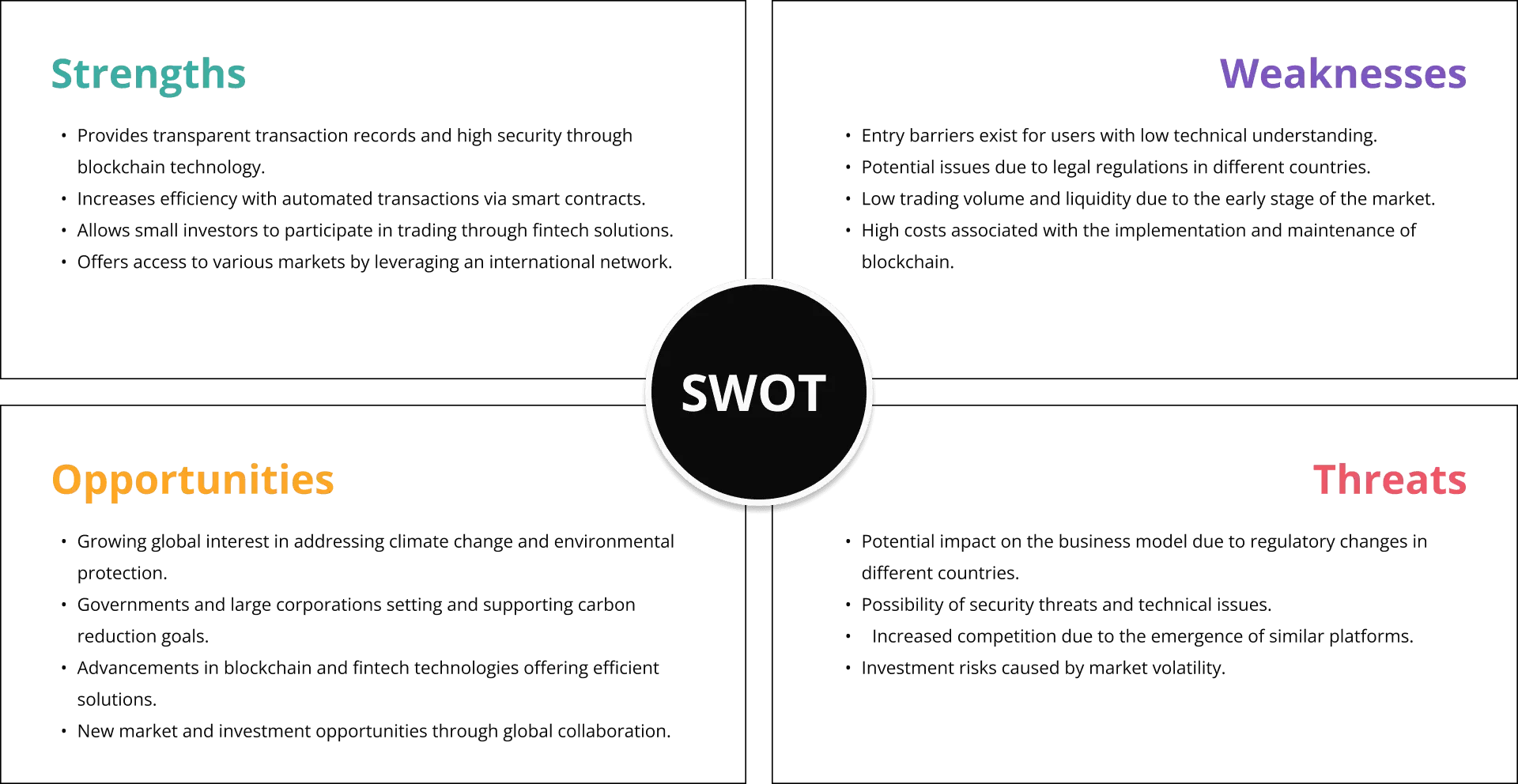
The SWOT analysis showed that while blockchain improves transparency and security, it can also introduce usability and regulatory complexity. This highlights the need for a simpler and more guided trading experience that balances trust with ease of use.
User-Centeric Analysis
Survey
Most respondents were unfamiliar with carbon trading platforms and identified a lack of clear information as the primary barrier. This gap between rapid market growth and user understanding indicates that users are not ready to engage without proper guidance. It highlights the need for an onboarding experience that not only explains the system but also builds trust and confidence step by step.
Survey period: Feb 07 - 18, 2025 / Number of respondents: 36
Users struggle to understand the value and structure of carbon credit trading
“It’s difficult to clearly understand the pros and cons of carbon credit trading.”
Insight 01
Complex procedures discourage users from even considering participation
“I’ve never considered trading because of the complex procedures.”
Insight 02
Transparency and speed are critical factors in building trust
“The speed and transparency of transactions are absolutely essential.”
Insight 03
Users need more structured and in-depth information to make decisions
“I need more specialized and in-depth information.”
Insight 04
Persona
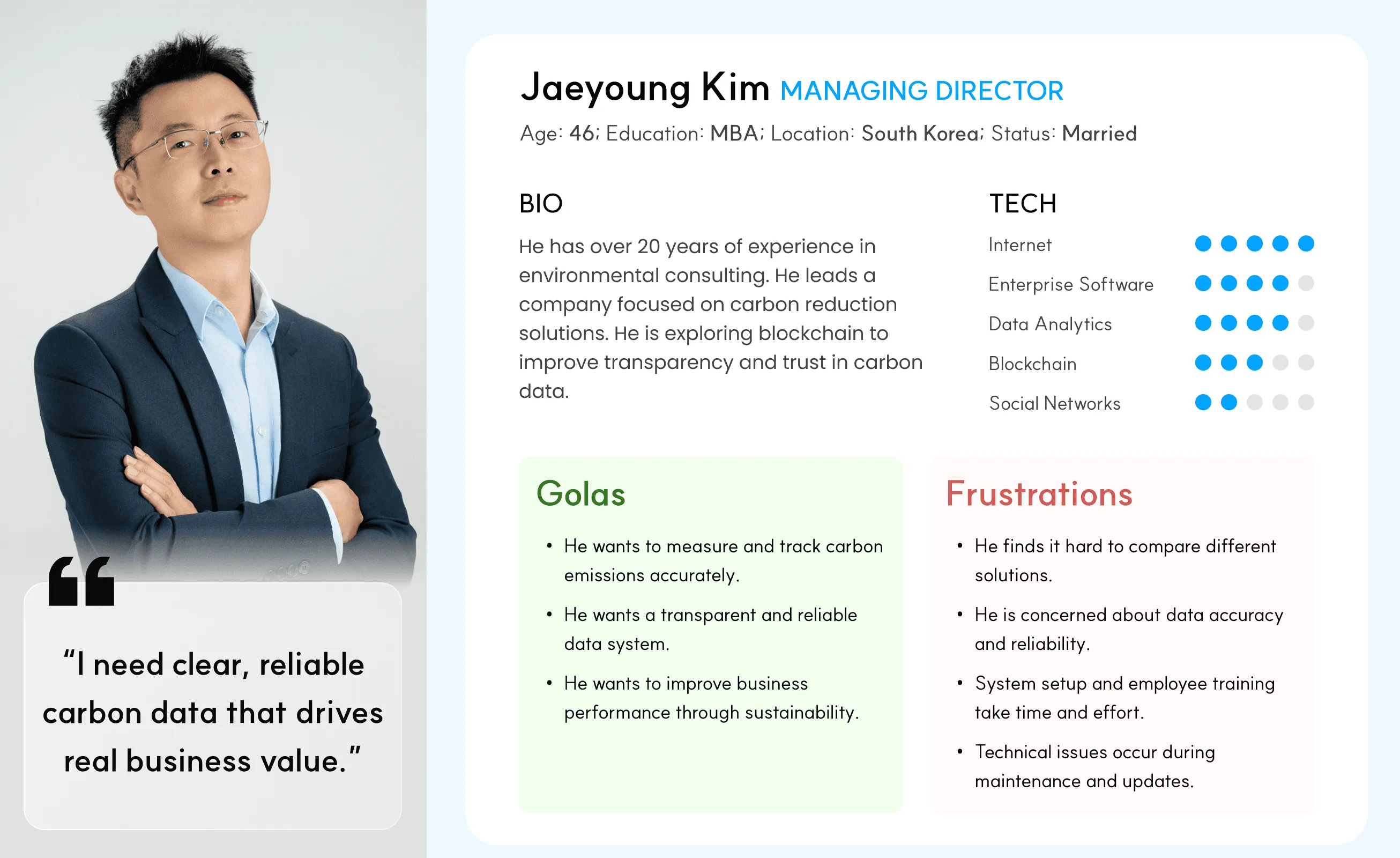
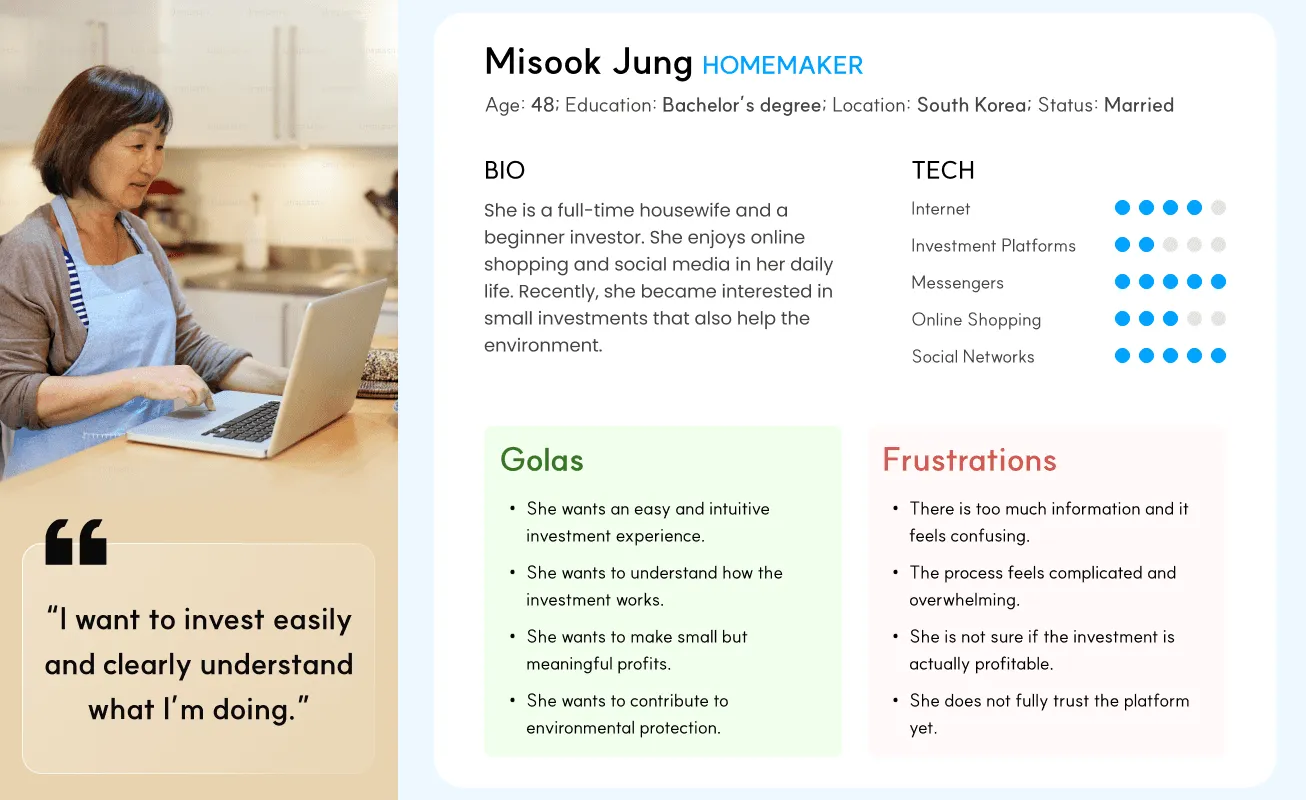
Two key user groups emerged. Corporate users focus on large-scale trading and regulatory compliance, requiring detailed data and control. In contrast, individual users are motivated by environmental impact but lack accessible and easy-to-understand information. This difference highlights the need for a flexible experience that provides both depth for experts and guidance for beginners. This led to a dual-platform approach: a data-rich web experience for corporate users and a simplified mobile flow for individuals.
From Insights to Decisions
From research insights to design decisions, we translated key user challenges into clear, actionable solutions that simplify complexity, build trust, and support informed decision-making.
Key Findings
Insight 01
Complexity prevents users from starting trading
Users are overwhelmed by complex systems and workflows
Insight 02
Low transparency reduces trust
Users hesitate due to unclear data and processes
Insight 03
Users struggle to make informed decisions
They need clear, structured guidance
Define
Users need a simplified and guided trading experience to start confidently and make informed decisions in carbon trading.
Design Decisions
Decision 01
Simplify the trading process into a clear, guided step-by-step flow
⇒ to reduce confusion and improve confidence
Decision 02
Structure trading information into clear and comparable formats
⇒ to support informed decision-making
Decision 03
Introduce transparent transaction history and verification
⇒ to build trust in the platform
Design Exploration
From Sketch to System
This section breaks down the design process into three stages: sketch, wireframe, and design system. Each stage focuses on turning early ideas into structured flows and consistent interfaces. Together, they demonstrate how early ideas were refined into a scalable system with consistent patterns and interactions.
Hi-Fidelity Design
The final high-fidelity design addresses two distinct user groups. The web platform focuses on corporate users with structured data and advanced insights, while the mobile app simplifies the experience for individual investors through guided flows and intuitive interactions. This approach balances complexity with accessibility across platforms.
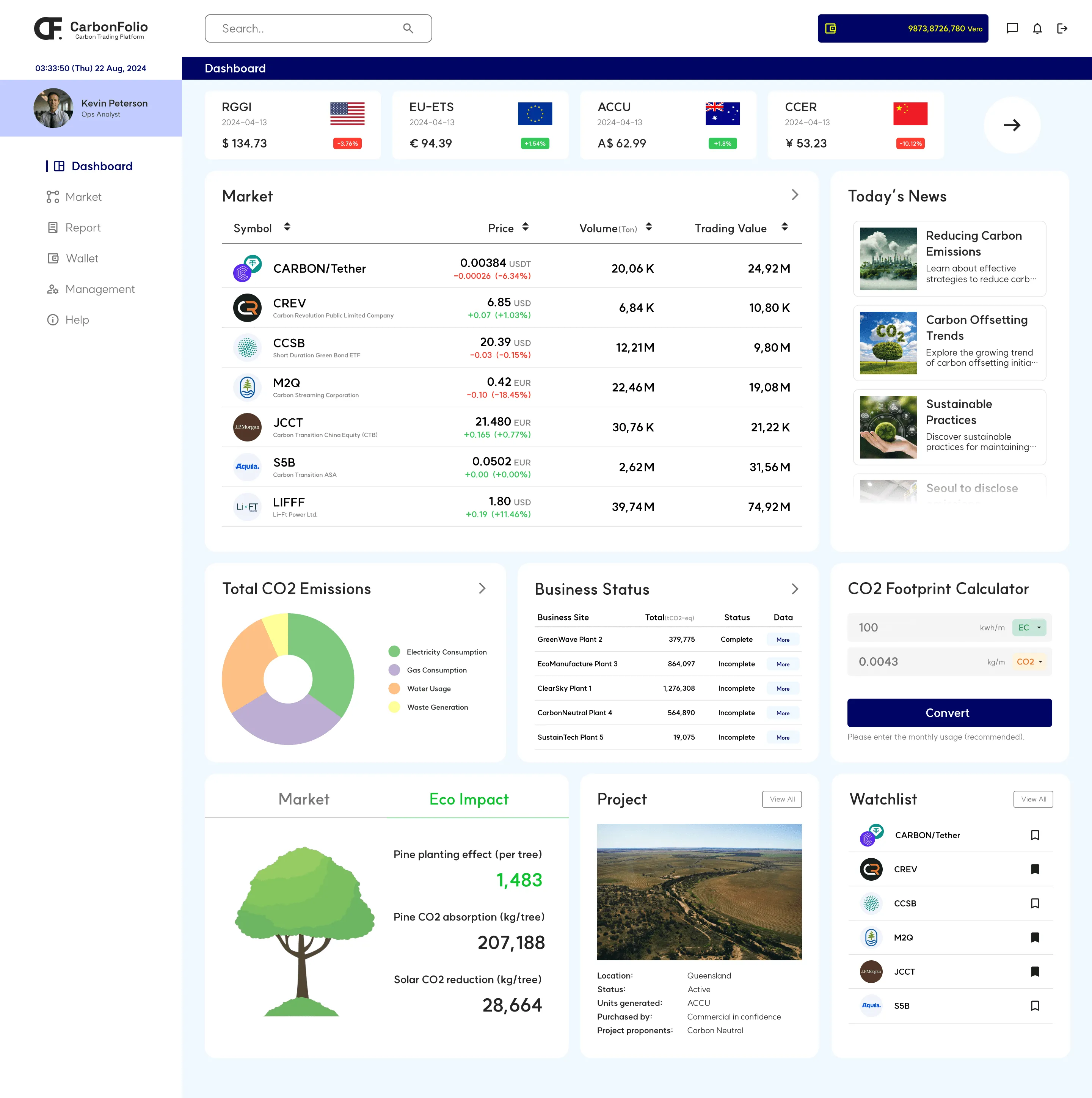
Web Dashboard
Decision 02
Decision 03
Designed to organize complex trading data into clear and comparable formats, while enhancing transparency through visualized transaction history and verified data sources. This helps users quickly understand key metrics and build trust in the platform.
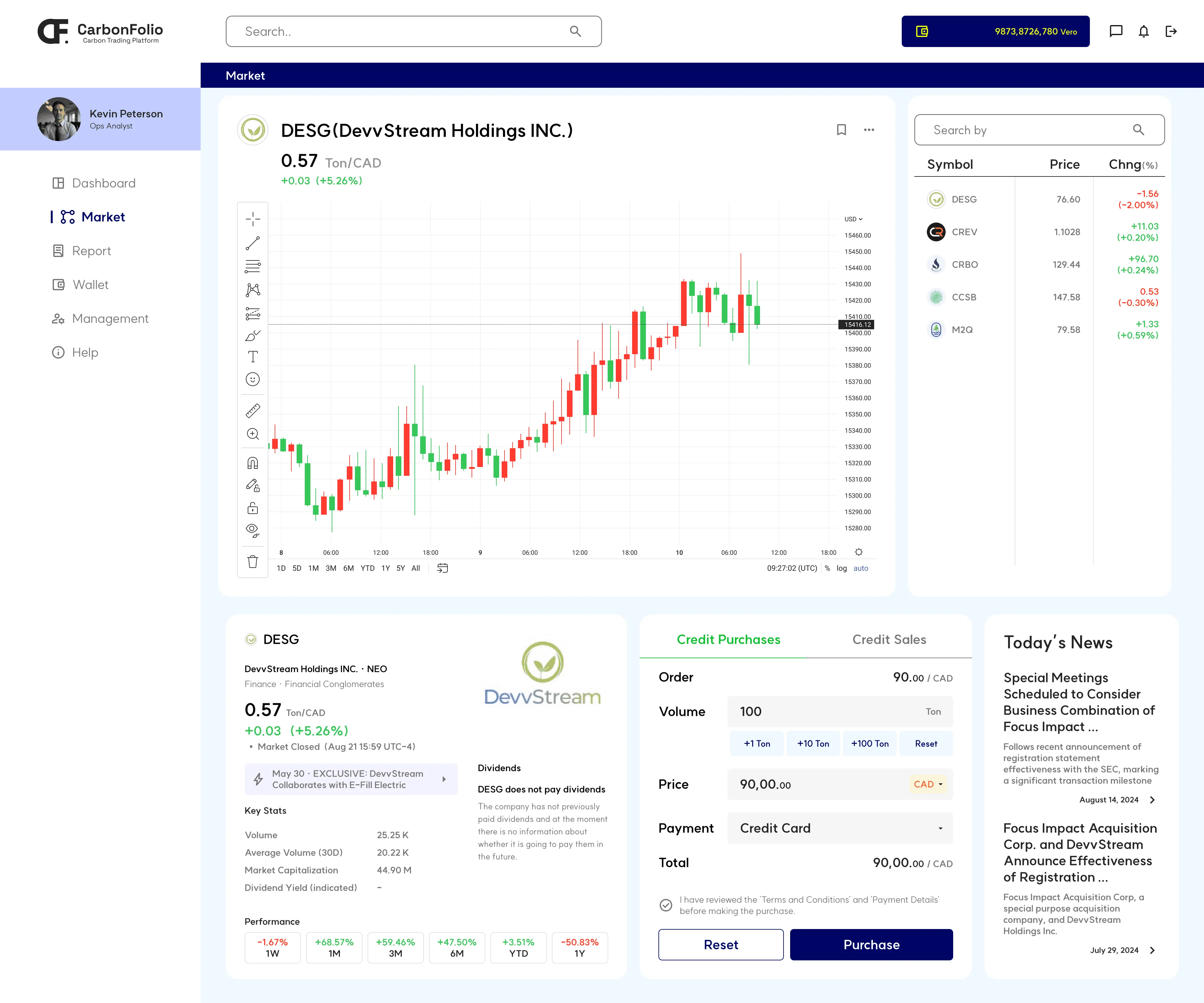
Web Market
Decision 01
Designed to simplify the trading experience by reducing complexity and presenting key actions clearly, allowing users to navigate and engage with trading more easily.
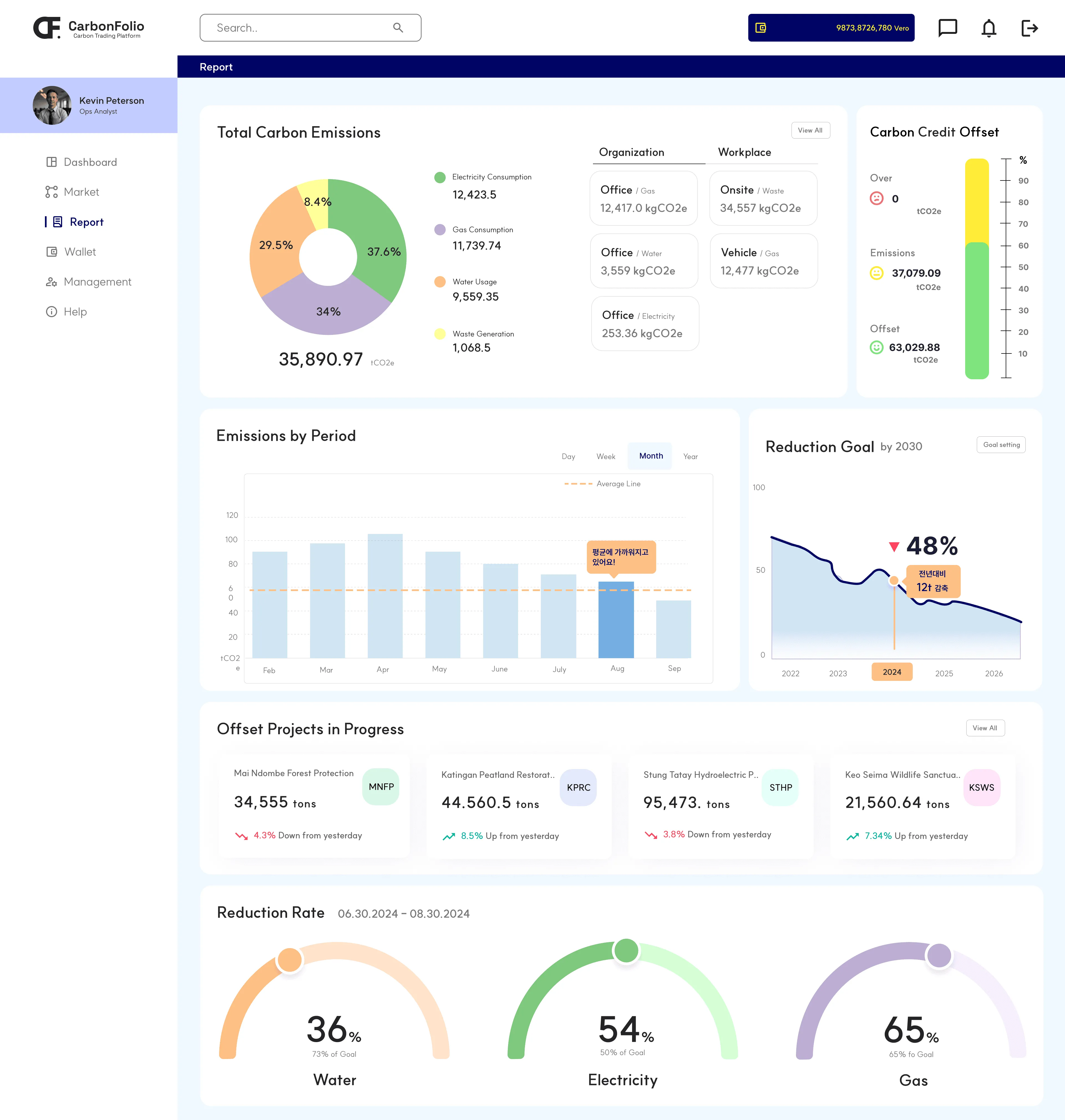
Web Report
Decision 02
Structured ESG and transaction data into a clear, digestible format, enabling users to analyze performance and make informed decisions efficiently.
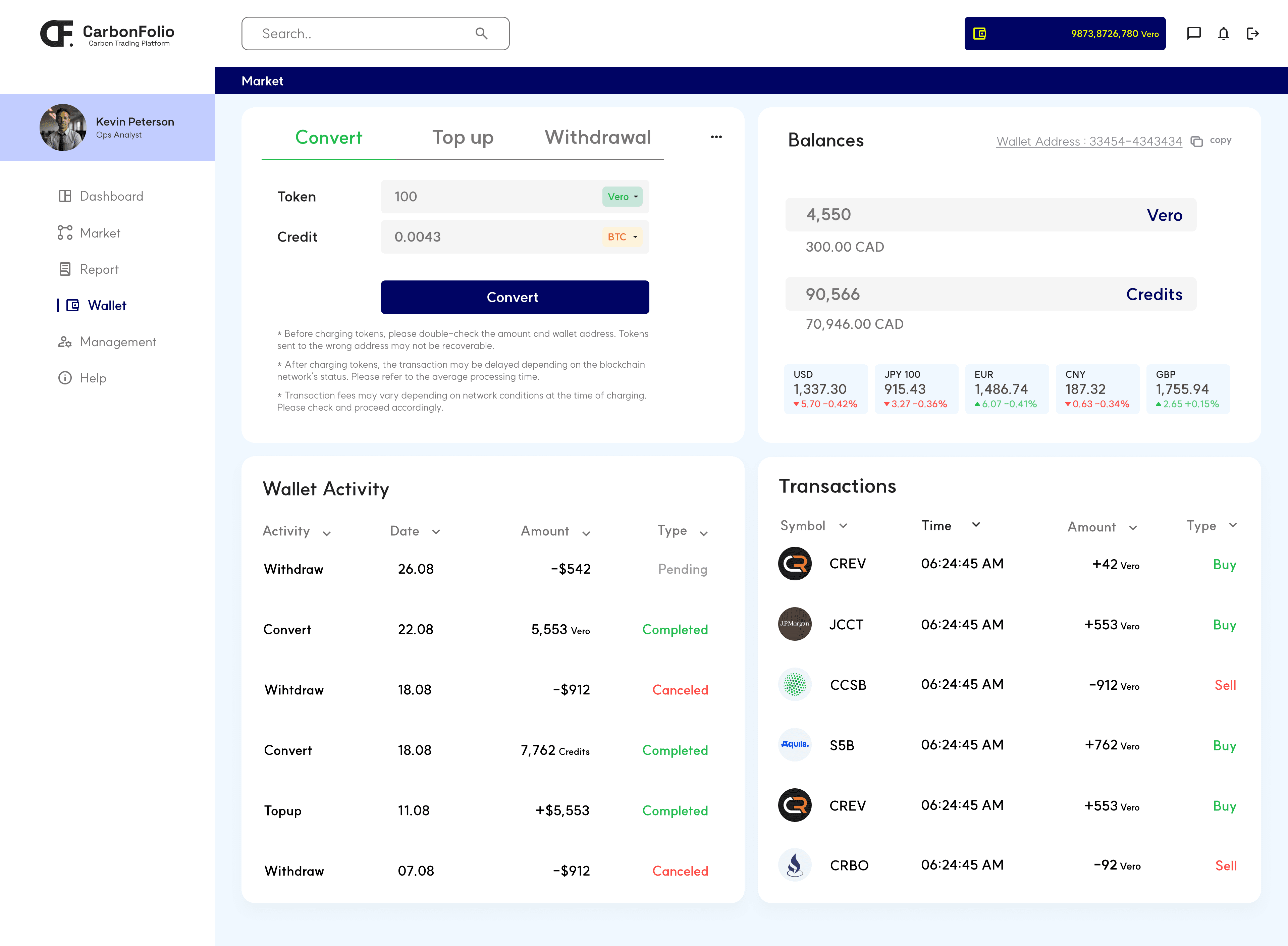
Web Wallet
Decision 02
Decision 03
Organized asset and transaction data in a structured layout with transparent records, helping users easily track activity and verify asset credibility.
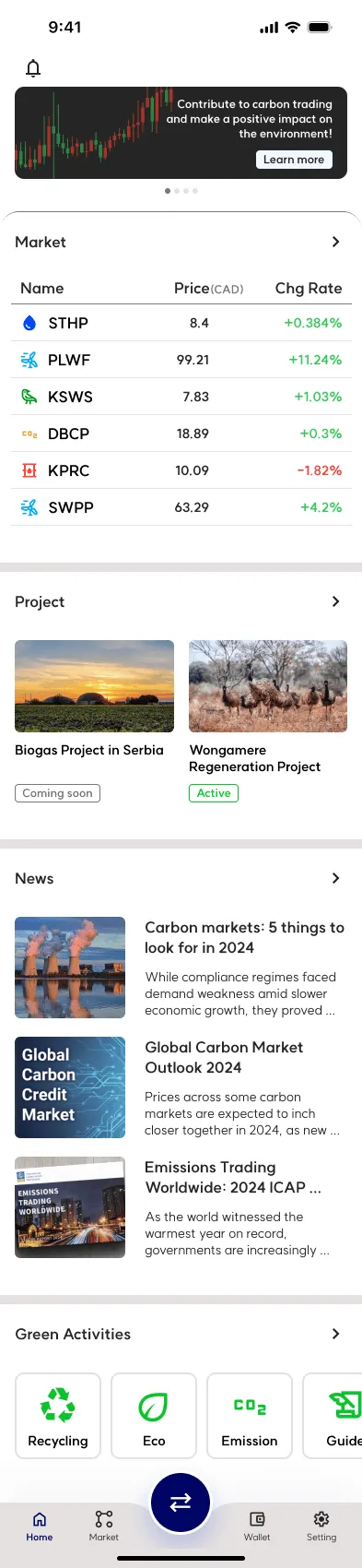
App Home
Decision 02
Presented key information in a simplified and structured way, allowing users to quickly grasp essential data and navigate based on their goals.
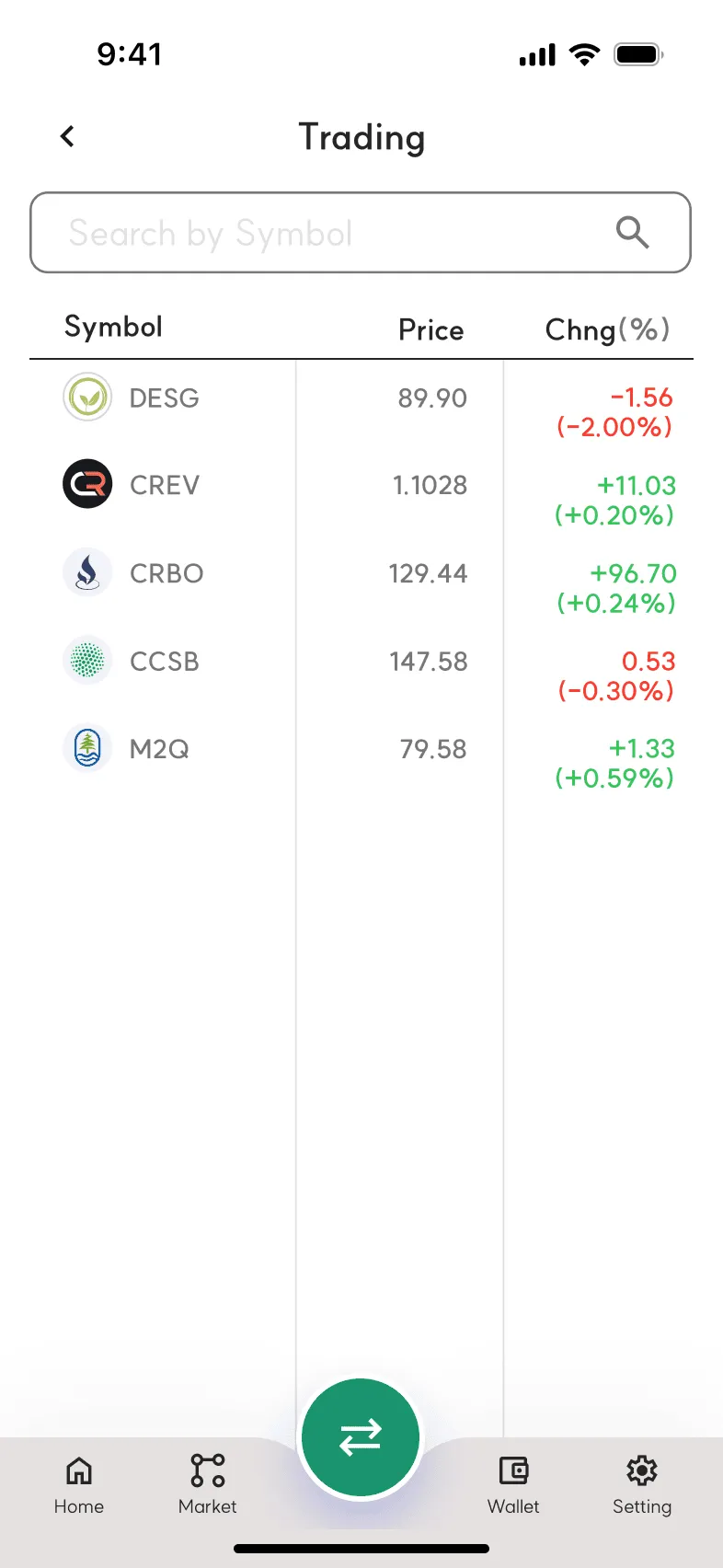
App Trading Search
Decision 01
Decision 02
Simplified the discovery process by organizing assets clearly and enabling intuitive search, reducing cognitive load and supporting faster decision-making.
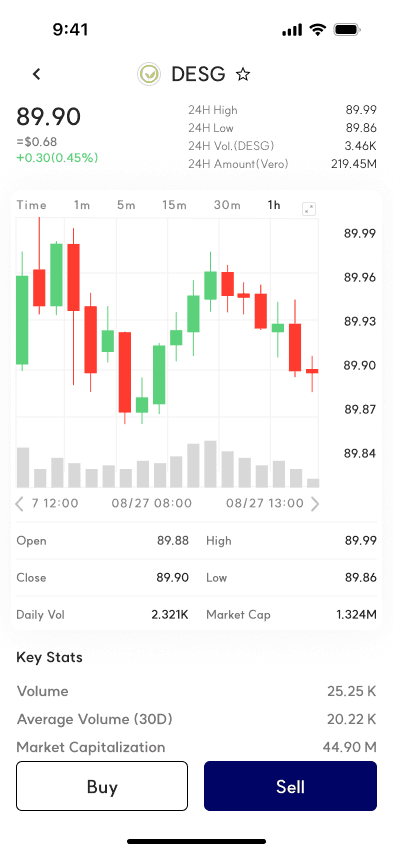
App Asset Detail / Buy Screen
Decision 02
Decision 03
Displayed detailed asset information with clear structure and transparent indicators, helping users evaluate credibility and make confident decisions.
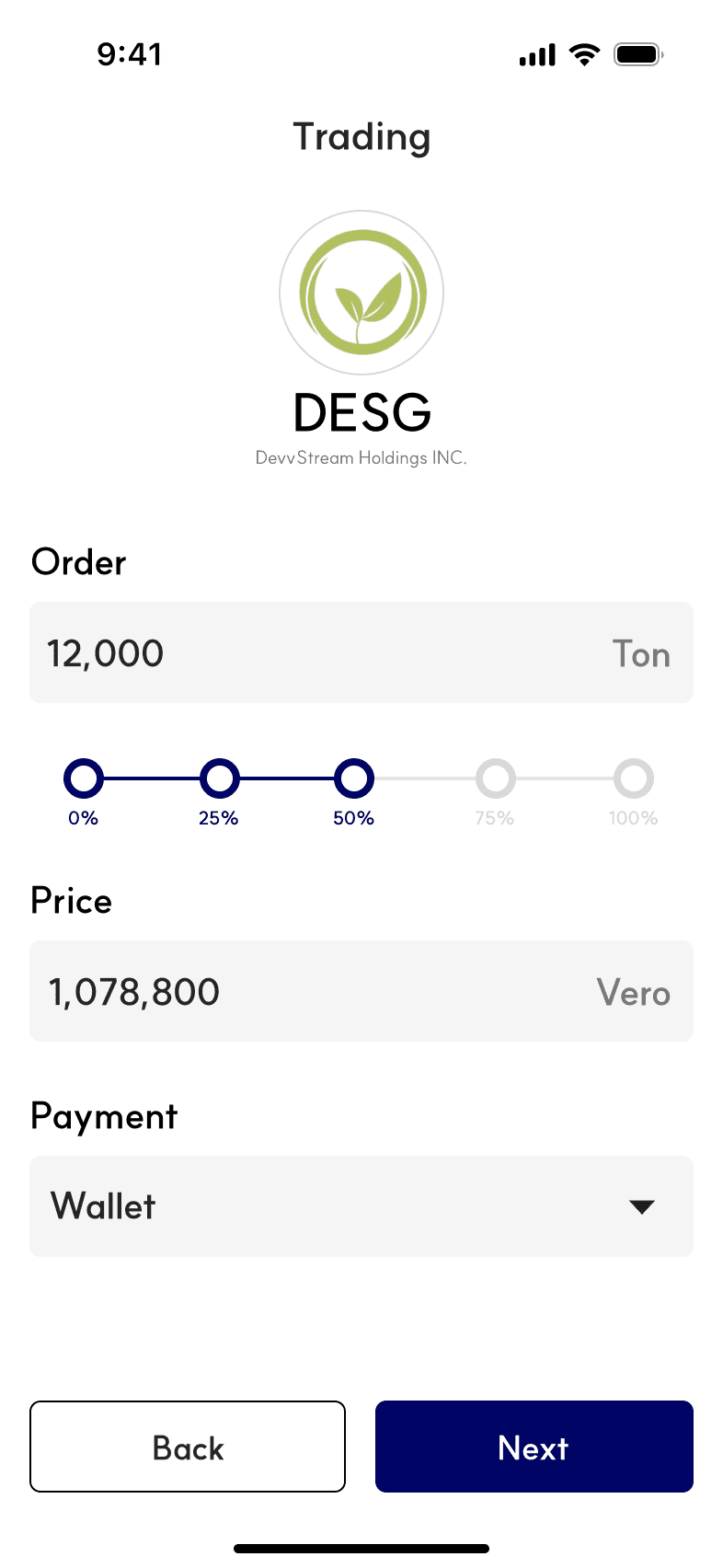
App Order Setup
Decision 01
Designed a guided step-by-step flow that simplifies the transaction process, making it easier for users to understand pricing and complete actions.
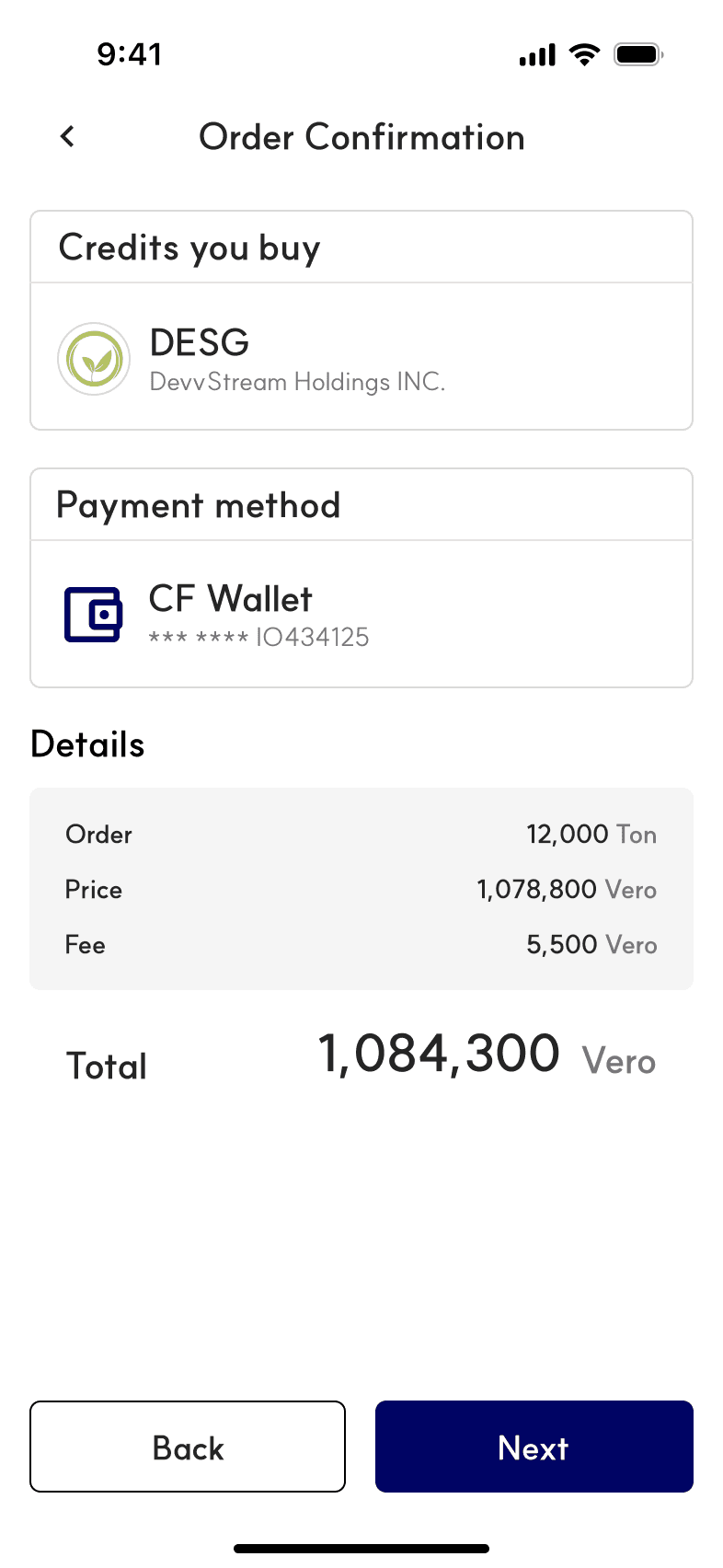
App Order Confirmation
Decision 03
Provided clear confirmation details and transparent transaction summaries, reinforcing trust and reducing uncertainty after completing an order.
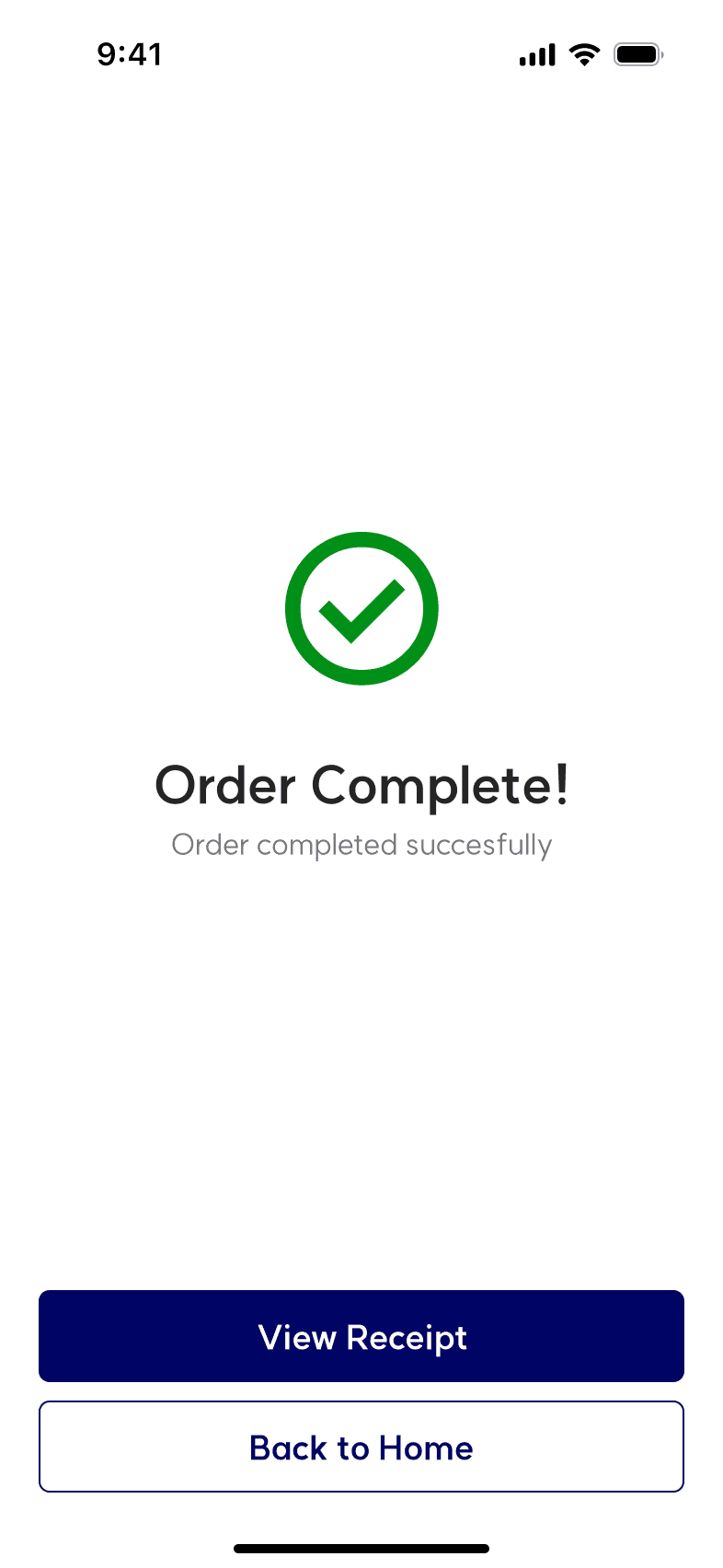
App Order Confirmation
Decision 01
Delivered a simple and clear completion experience that reassures users and confirms successful transaction flow.
Validation & Outcome
What I learned
Designing for complex financial systems is not just about adding features, but about making information understandable.
It was challenging to balance detailed data with clarity, especially for users with different levels of knowledge.
I learned that structure and hierarchy matter more than visual design when dealing with complex systems.
Designing for both beginners and experienced users required different levels of guidance and flexibility.
Building trust through transparency was not just a feature, but a core experience design challenge.
Next Steps
Test whether users can complete the trading flow without confusion
Explore ways to improve data comparison through interactive visualization
Refine onboarding to better support first-time users
Continue improving the balance between data depth and usability